Our Book of the Month for October, part of Books Unchained — our monthly series exploring the remarkable volumes preserved in Wells Cathedral’s historic Chained Library.
Visit the Blog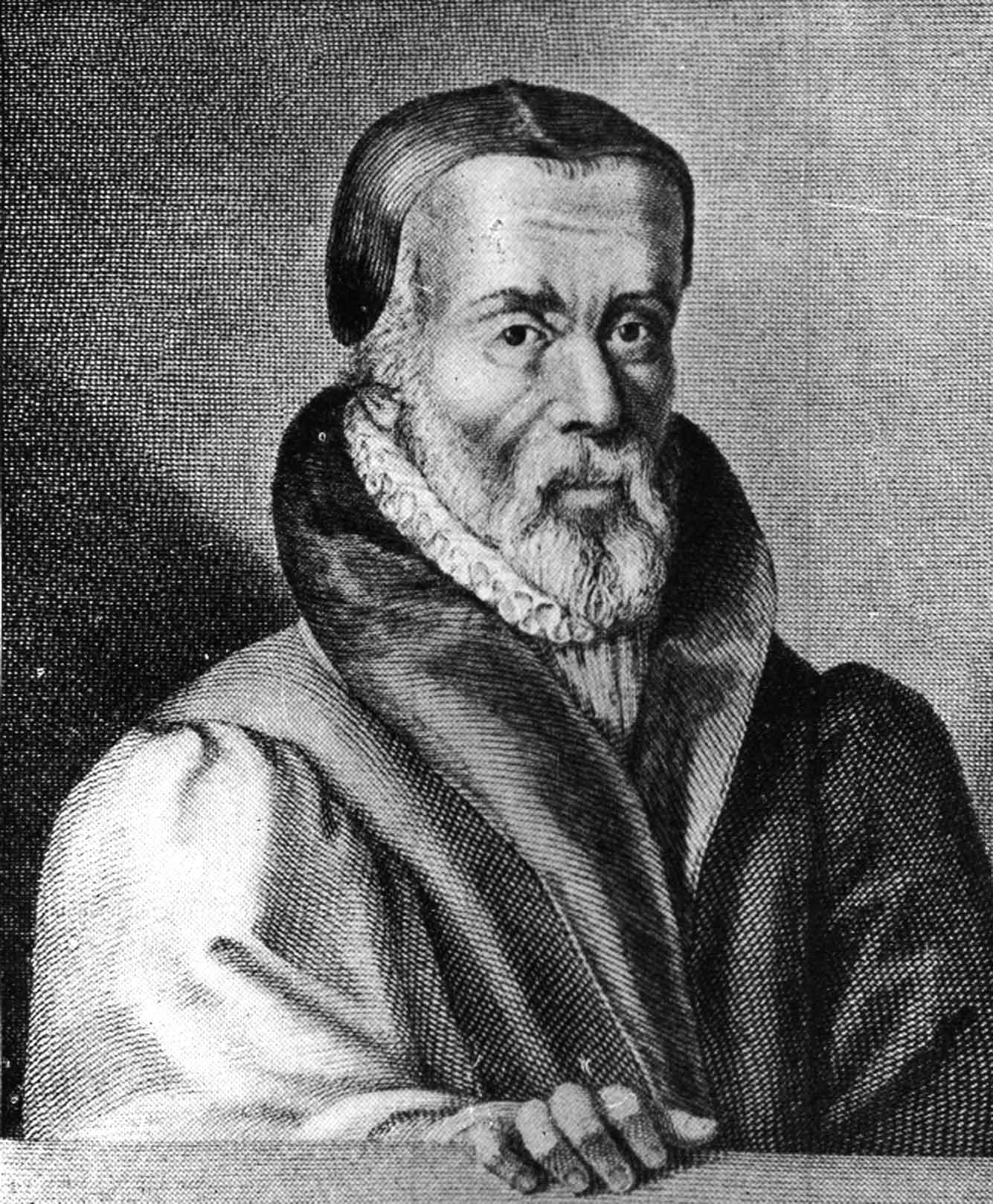
Image: William Tyndale in Foxe’s Book of Martyrs – Wikimedia Creative Commons
Opening the Word: Tyndale, Translation, and Transformation
Five hundred years ago, William Tyndale’s New Testament was first printed in English. His words are still being read today. In 2026, we mark the 500th anniversary of the first printing of Tyndale’s English New Testament. His translation was a significant moment in the history of the English Bible, not simply because it was another translation, but because it helped transform how Scripture could be translated, printed and encountered.
The Wells Cathedral Library collection allows us to trace that transformation through the books themselves. From a remarkable 1541 Great Bible, originally belonging to the Vicars’ Choral Library, through the King James tradition and later English Bibles, to publications from our own time, the collection shows that the story of the English Bible did not end with Tyndale, or even with the King James Bible. It is a story that is still developing.
Tyndale and the English Bible
The Bible had been translated into English from Latin before Tyndale. The translations associated with John Wycliffe and his followers produce around 250 manuscripts of the Scripture in English, although they were translated from the Latin Vulgate.
Tyndale’s approach was different. He sought to translate directly from the original Hebrew and Greek, expressing Scripture in clear, accessible English. His New Testament, first printed in 1526, was the first English New Testament translated directly from Greek to be printed.
The printing press made this possible on an entirely different scale. A translation could now be reproduced and circulated far more widely than a handwritten manuscript.
Tyndale’s work was controversial. An English Bible that could circulate beyond the control of established authorities challenged existing ideas about Scripture, authority and access to religious knowledge. Tyndale worked in exile and continued translating the Old Testament until his arrest and execution in 1536. He did not live to see the extent of his influence.
His translation survived him, becoming an important foundation for later English Bibles, including the Matthew Bible of 1537 and the Great Bible of 1539. His influence can also be traced through the tradition that eventually produced the King James Bible of 1611.
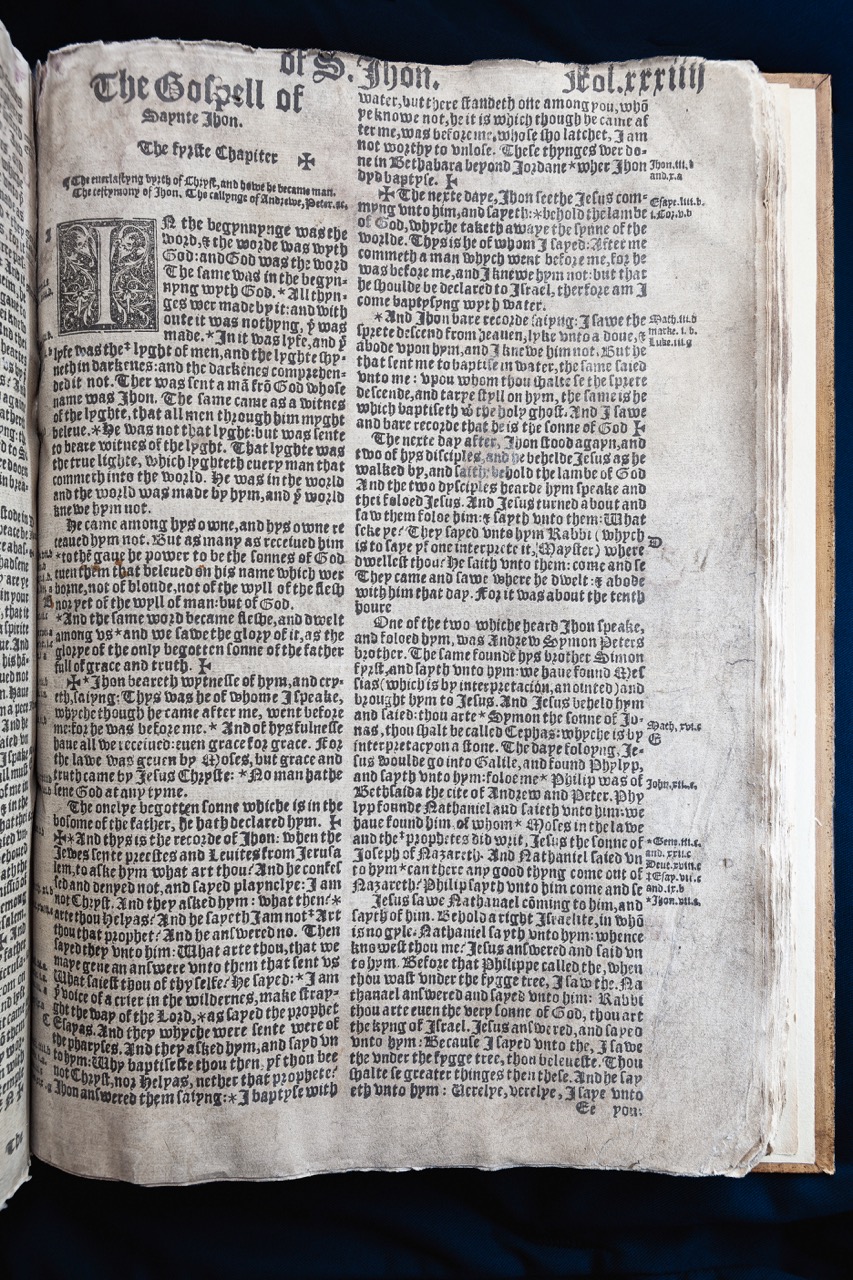
Image: The opening of St John’s Gospel in Wells Cathedral’s Great Bible (1541) © David Sumner
A Great Bible at Wells
One of the most significant Bibles in the Wells Cathedral Library is our 1541 edition of the Great Bible. The Great Bible drew heavily on Tyndale’s translations, supplemented by the work of Myles Coverdale. Published under royal authority during the reign of Henry VIII, it was an important step in establishing the English Bible within the Church of England. This makes the book more than an early printed Bible. It connects Tyndale’s translation with the Reformation, the changing status of English Scripture and the history of Wells itself. It also allows us to see Tyndale’s influence in a book produced just a few years after his death.
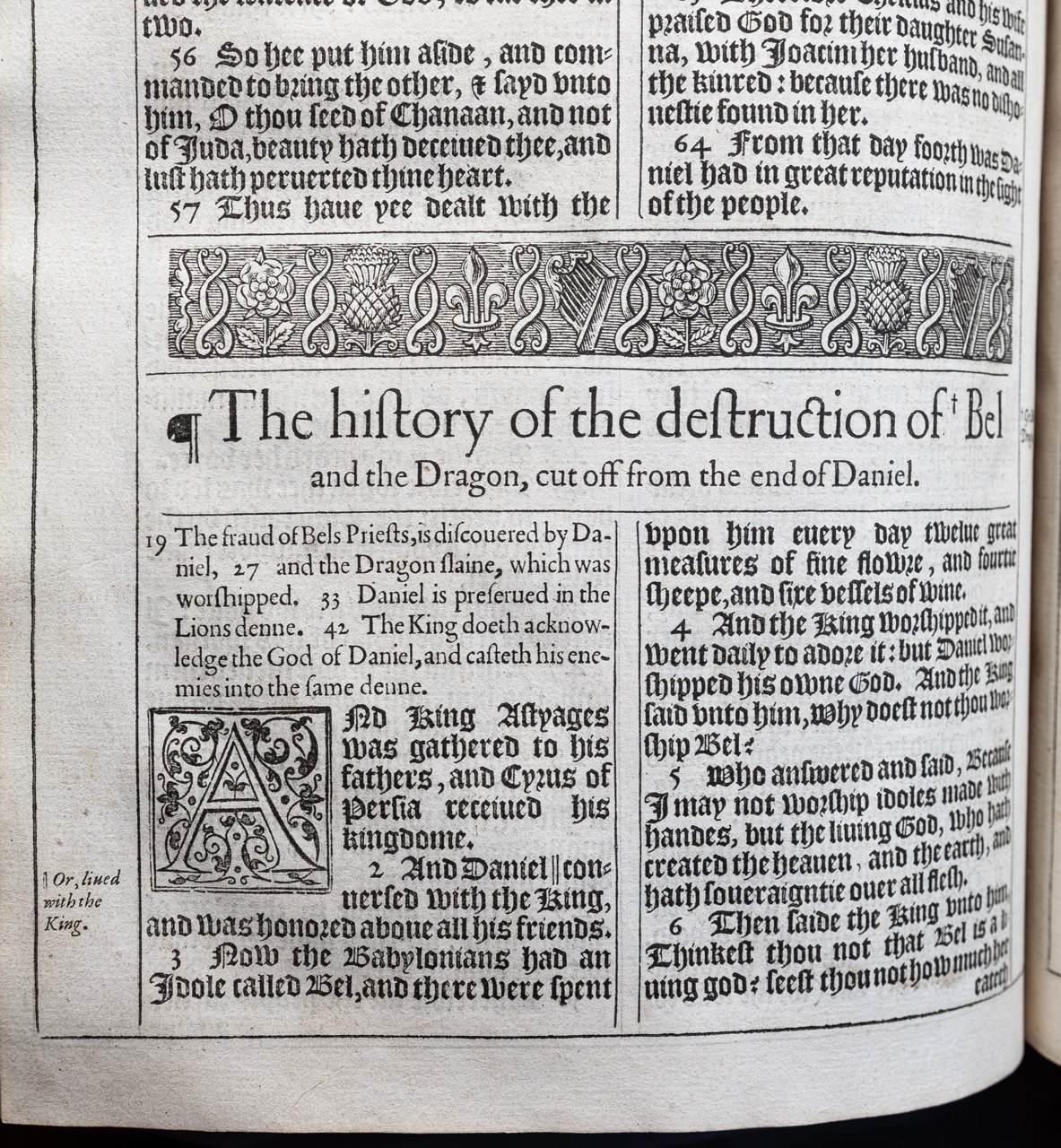
Image: Extract from a King James Bible (1613) in the Chained Library of Wells Cathedral © David Sumner
From Tyndale to the King James Bible
The English Bible continued to evolve. The Geneva Bible, first published in 1560, became particularly influential among Protestant readers. The Bishops’ Bible followed in 1568, and in 1611 the first edition of the King James Bible, also known as the Authorised Version, was published having been commissioned under James I following.
The King James Bible was not created from scratch. Its translators worked within a long tradition of English biblical translation, drawing on earlier English versions, and Tyndale’s influence remained substantial. Much of the language of the King James New Testament can be traced back to Tyndale’s earlier work.
The Wells collection contains several examples of this continuing tradition, including seventeenth-century English Bibles, a two-volume Bible printed at Cambridge in 1660 and a 1675 Bible. Several volumes were owned by Robert Creighton, Precentor of Wells from 1674 to 1734, giving these books an additional connection with the Cathedral’s own history.
Together, these Bibles show something important: the English Bible was never simply a finished text. It was repeatedly printed, revised, translated and interpreted.
And the changes are sometimes surprisingly visible.
The books in the collection allow us to see the development of bible verses, changes in the order and arrangement of biblical books, and differences in what was included or omitted in particular editions. They reveal not only how the words changed as English evolved, but how the Bible as a physical book changed too.
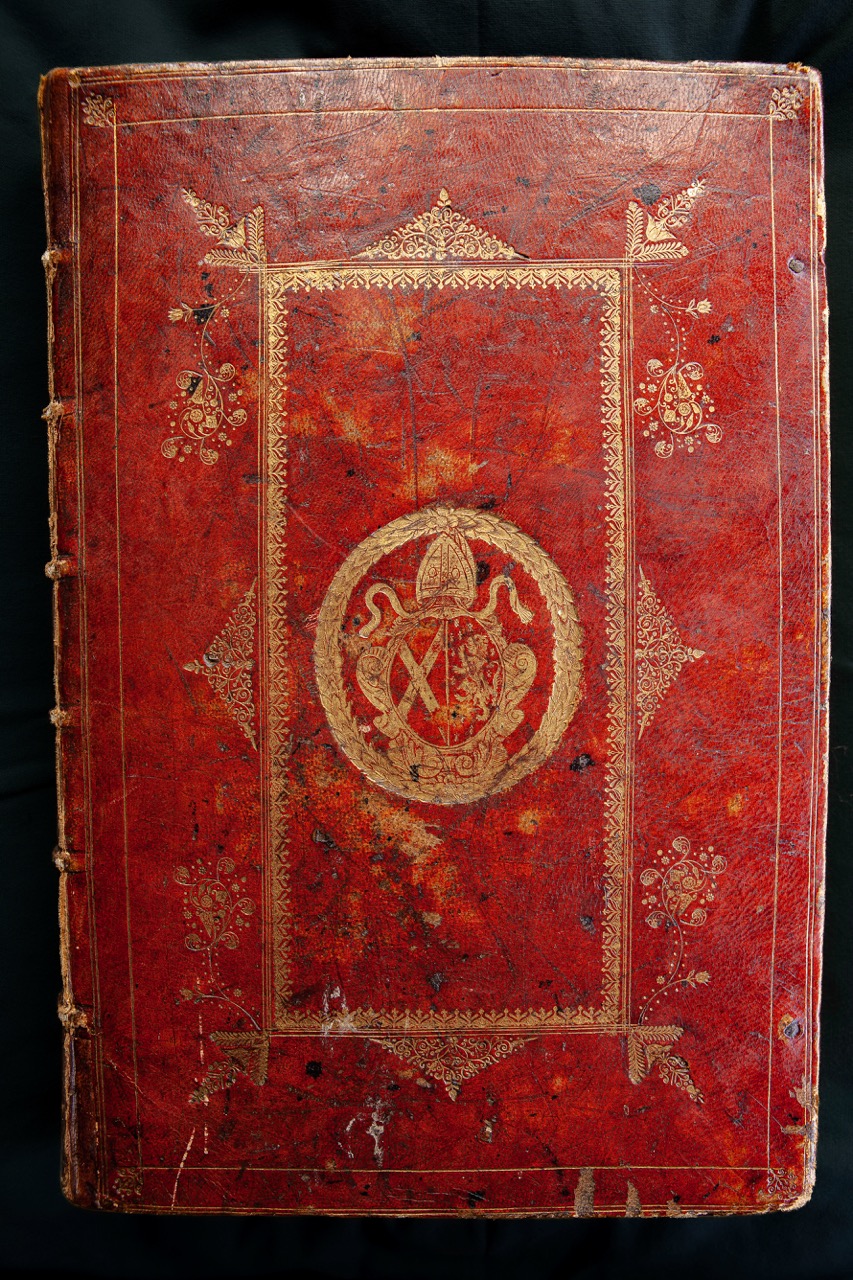
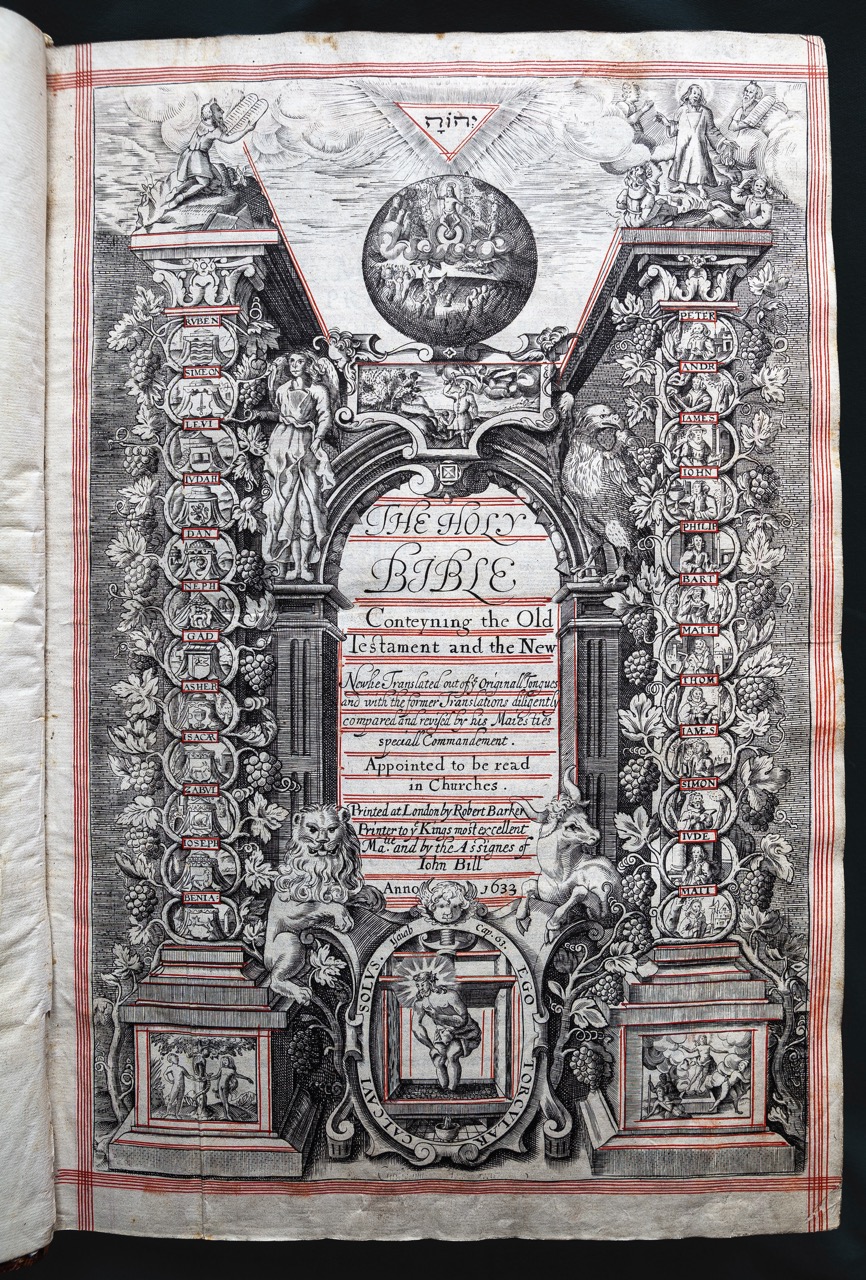
Images: The cover and frontispiece of Creighton’s Bible (1633), still used at the installation of clergy and prebends at Wells Cathedral © David Sumner
From the sixteenth century to today
The story does not stop with the Reformation or the King James Bible.
The Library’s collection of English Bibles continues through the eighteenth century and into modern publications, allowing us to see how English-language Scripture has continued to develop as language, scholarship and approaches to translation have changed.
Tyndale’s legacy is therefore not simply about one sixteenth-century translation. His work became part of a much longer tradition of revising, reprinting and retranslating the Bible for new generations of readers.
As English spread around the world, the story became global too. English-language Bibles travelled with people, churches and communities and became part of religious and cultural life in many different places.
The Wells Cathedral Library collection captures a small part of this much larger story. Its Bibles show an evolving tradition rather than a single, finished text.
From the printed page to the screen
Today, the latest transformation is digital.
Tyndale’s world was changed by the printing press. Ours is being reshaped by digital technology. A Bible can now be carried on a phone, listened to as audio, searched instantly and read alongside multiple English translations.
The digital Bible is not simply a printed book reproduced on a screen. It changes how readers encounter the text, making it easier to search, compare, listen to and share.
In that sense, the transformation that Tyndale was part of continues. The technology has changed, and the English language continues to evolve, but one question remains familiar: How can Scripture be expressed in language that its readers can understand?
Opening the Word
In 2026, Wells Cathedral marked the anniversary with Opening the Word: Tyndale, Translation, and Transformation, a symposium which took place on Friday 9 October. The day explored Tyndale’s work, the history of biblical translation, and the continuing significance of his legacy. It was an opportunity to consider not only the history of the English Bible, but also the questions of language, translation, interpretation and access to Scripture that remain relevant today.
Five hundred years after Tyndale’s New Testament first appeared in print, his words remain part of the English Bible. At Wells, we can trace that legacy through the books themselves — from the 1541 Great Bible, through later English Bibles and the King James tradition, to modern publications in the Library.
The technology has changed. The language has changed. The ways we encounter Scripture have changed. But the work of opening the Word continues.
Keep the story going…
Join us next month as another hidden treasure of the Library is unchained. Until then, why not visit the Cathedral’s Chained Library and see these extraordinary volumes for yourself?
Learn more on our Library page — and don’t forget to share this post with fellow book lovers!